

Ripple is expanding deeper into traditional finance. Through Ripple Prime, the institutional brokerage platform built from its acquisition of Hidden Road, the company is now moving into areas such as leveraged ETF financing — a business traditionally dominated by major Wall Street banks.
Ripple Prime can provide institutional clients with financing structures, derivatives access, collateral management and multi-asset execution.
For Ripple as a company, this is a significant strategic expansion.
For XRP holders, however, the more important question is:
If Ripple keeps growing on Wall Street, why does that not automatically create stronger demand for XRP?
Understanding the difference between Ripple as a company and XRP as a digital asset is essential when evaluating these developments.
Ripple Prime is Ripple’s institutional prime brokerage platform for professional market participants.
It is designed for hedge funds, asset managers, trading firms and other institutional clients that need access to financing, trading and settlement across different asset classes.
The platform emerged from Ripple’s acquisition of Hidden Road and significantly expands Ripple’s business beyond traditional blockchain payments.
Through Ripple Prime, institutional clients can potentially access services such as:
- trade financing
- derivatives
- collateral management
- multi-asset execution
- institutional risk and settlement infrastructure
This moves Ripple into a part of the financial market traditionally dominated by major investment banks and prime brokers.
For Ripple, that is strategically important because the company is no longer focusing only on digital asset infrastructure, but is moving deeper into traditional capital markets.
Why Is This So Important for Ripple?
With Ripple Prime, Ripple is moving closer to the traditional Wall Street ecosystem.
Prime brokerage is a central part of institutional finance. Large banks provide professional investors with financing, trading infrastructure, derivatives access and risk-management services.
If Ripple succeeds in establishing itself in this market, the company could expand far beyond its original role in crypto and blockchain payments.
Strategically, this could mean:
- new institutional revenue streams for Ripple
- deeper relationships with hedge funds and asset managers
- greater integration with traditional financial markets
- more opportunities to connect digital assets with conventional financial products
Ripple’s recent cooperation with Meritz Securities in South Korea also shows how strongly the company is expanding its institutional financial infrastructure.
For Ripple as a company, that is a significant step.
For XRP, however, it does not automatically mean the same thing.
Ripple can generate revenue from institutional financial services even when XRP is not directly used in those transactions.
Why Doesn’t XRP Automatically Benefit?
The key point is the distinction between Ripple as a company and XRP as a digital asset.
Ripple can win new clients, generate fees and expand its institutional business without XRP being required in every transaction.
That means:
- higher Ripple revenue does not automatically create higher demand for XRP
- new Wall Street clients do not necessarily need to use XRP
- traditional financial products can run through Ripple Prime without involving XRP
- derivatives and financing transactions can also take place entirely outside the XRP Ledger
For XRP holders, this distinction is essential.
Ripple’s expansion becomes directly relevant for XRP only when new products, payment flows or settlement processes actually use XRP, the XRP Ledger or XRPL-based infrastructure.

When Could XRP Actually Benefit?
XRP could benefit more directly from Ripple’s Wall Street expansion if new products or institutional processes actually use the XRP Ledger or XRP as a bridge or liquidity asset.
Possible scenarios could include:
- institutional payments settled through the XRP Ledger
- XRP used as a bridge asset between currencies or digital assets
- tokenized assets issued or settled on the XRP Ledger
- stronger integration of RLUSD with XRPL-based liquidity
- financial products using Ripple infrastructure together with blockchain settlement
As long as those connections are not clearly confirmed, it is important to distinguish between Ripple’s corporate growth and direct demand for XRP.
That distinction is essential for a realistic assessment of the situation: Ripple can grow significantly as a company while XRP may still benefit only indirectly or with a delay.
What Role Could RLUSD Play?
Alongside XRP, RLUSD, Ripple’s U.S. dollar-backed stablecoin, could also become increasingly important within the company’s institutional strategy.
RLUSD can be used on the XRP Ledger and is designed for applications where financial institutions or companies need a stable digital dollar.
In the long term, this could become relevant for Ripple Prime if traditional financial products, digital assets and blockchain-based settlement become more closely connected.
Potential use cases could include:
- institutional payments
- stablecoin-based liquidity
- tokenized securities
- collateral and settlement
- connections between traditional and digital financial markets
However, one point remains important:
There is currently no confirmation that Ripple Prime is using RLUSD or the XRP Ledger for its Wall Street financing activities.
The connection is strategically interesting, but it should not be presented as an already confirmed use case.
What Does Ripple’s Wall Street Expansion Mean for the XRP Ledger?
Even if Ripple Prime does not automatically use XRP or the XRP Ledger, Ripple’s stronger presence in traditional finance could still become relevant over time.
The more Ripple works with institutional market participants, the greater the possibility that blockchain-based products and settlement models could move further into the mainstream.
The XRP Ledger could become especially relevant in areas such as:
- tokenized assets
- fast international settlement
- stablecoin transactions
- digital liquidity
- institutional payment infrastructure
For a broader overview of how the XRP Ledger is evolving toward institutional financial infrastructure in 2026, see our XRP Ledger Institutional Finance Map 2026.
But the distinction remains important:
A stronger Wall Street presence for Ripple is not proof of direct XRP Ledger adoption.
For XRP, the development becomes truly significant only when concrete products or payment flows are confirmed to use the XRP Ledger directly.
XRP Seoul 2026 also highlighted the growing focus on institutional use cases, tokenization and the future development of the XRP Ledger.
At the same time, new features such as Permission Delegation are making the XRP Ledger more suitable for complex institutional structures.
Why Ripple and XRP Remain Connected Long Term
Even though Ripple as a company and XRP as a digital asset need to be clearly distinguished, important connections between them still remain.
Ripple is building products and services around institutional payments, stablecoins, custody and digital financial infrastructure. At the same time, the XRP Ledger remains a key blockchain ecosystem in which XRP serves as the native digital asset.
Over the long term, XRP could benefit more directly if Ripple’s institutional expansion leads to concrete use cases in which:
- XRP is used as a bridge asset
- liquidity is provided through the XRP Ledger
- tokenized assets are issued or settled on XRPL infrastructure
- RLUSD and XRP are used together in institutional payment models
- settlement processes move onto the XRP Ledger
The key question is therefore not only how much Ripple grows, but how closely that growth becomes connected to XRP and the XRP Ledger in practice.
Learn More About Ripple, XRP and the Future of Digital Finance
If you want to understand the bigger picture behind Ripple, XRP, the XRP Ledger, RLUSD, stablecoins, tokenization and institutional adoption, my book “XRP – WHEN THE GIANT AWAKENS” provides a much deeper overview.
The book explains not only the XRP ecosystem, but also the foundations of today’s financial system — from banks, money creation and inflation to blockchain, digital assets and the possible future of international financial infrastructure.
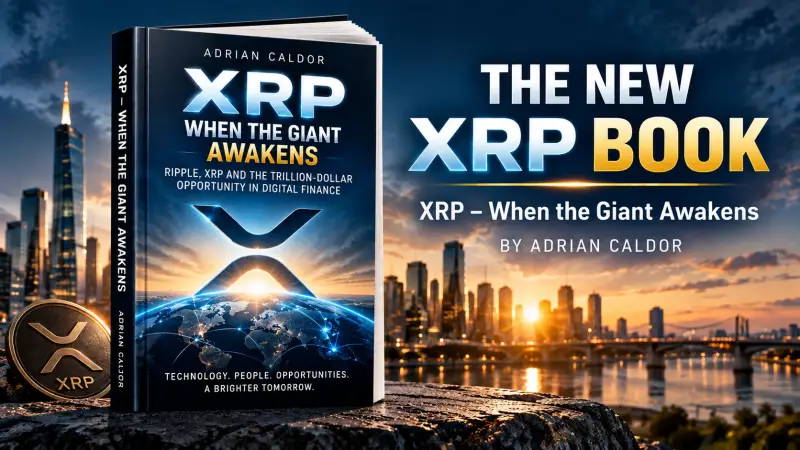
XRP – WHEN THE GIANT AWAKENS
Ripple, XRP and the Trillion-Dollar Opportunity in Digital Finance
by Adrian Caldor
Conclusion
Ripple’s expansion into Wall Street is strategically important for the company.
Through Ripple Prime, Ripple is entering institutional business areas that have traditionally been dominated by major banks and prime brokers.
For XRP, however, this does not automatically mean higher demand.
The key question is whether Ripple’s growing institutional business eventually leads to concrete use cases involving XRP, the XRP Ledger or RLUSD.
That is the difference between a positive corporate development for Ripple and a direct fundamental impact on XRP.
Over the long term, Ripple’s stronger relationships with banks, hedge funds and other institutional market participants could create new opportunities for the XRP ecosystem.
In the short term, however, one point remains clear:
Ripple can grow as a company without XRP automatically benefiting to the same extent.
Sources
-
Wall Street Journal – Ripple Expands Into Wall Street With Ripple Prime
Open source -
Seoul Economic Daily – Ripple Expands on Wall Street but XRP Price Lags
Open source -
Crypto.news – Ripple challenges Wall Street banks with leveraged ETF financing push
Open source
Add comment
Comments