

RIPPLE – THE COMPANY BEHIND DIGITAL FINANCIAL INFRASTRUCTURE
RIPPLE, BLOCKCHAIN AND THE FUTURE OF GLOBAL PAYMENTS
Ripple is a technology company that develops infrastructure and solutions for global payments and digital assets. Founded in 2012, the company focuses on making international transfers of value faster, more efficient and increasingly digital.
Ripple is closely connected to the history of XRP and XRP Ledger (XRPL), but Ripple, XRP and the XRP Ledger are distinct. Ripple is a company, XRP is a digital asset, and the XRP Ledger is a decentralized blockchain infrastructure.
WHAT DOES RIPPLE DO?
Ripple develops technology for cross-border payments, digital assets and institutional financial infrastructure. Its solutions are designed to help banks, payment providers and businesses transfer value across borders and integrate digital assets into existing financial processes.
Ripple aims to connect traditional financial infrastructure with blockchain technology. Its activities include solutions for international payments, digital asset custody, stablecoins and other areas of blockchain-based financial infrastructure.
Rather than operating as a traditional cryptocurrency exchange, Ripple positions itself as a technology and infrastructure company serving the increasingly digital global financial system.
RIPPLE AND XRP – HOW ARE THEY CONNECTED?
Ripple and XRP are often mentioned together, but they are not the same thing. Ripple is a technology company, while XRP is the native digital asset of the XRP Ledger.
XRP can be held, transferred and used on the XRP Ledger independently of Ripple. At the same time, Ripple has used XRP in certain payment and liquidity solutions and holds a significant amount of XRP, with a large portion managed through escrow mechanisms.
The relationship between Ripple and XRP is therefore important, but developments involving Ripple as a company should not automatically be treated as developments in the adoption or use of XRP.
RIPPLE AND GLOBAL PAYMENTS
International payments still often depend on multiple banks, payment providers and different technical systems. Ripple develops infrastructure designed to make cross-border payments more efficient and simplify the movement of value between different financial systems.
A key focus is on speed, liquidity and connectivity between currencies and digital assets. Depending on the product and use case, traditional currencies, stablecoins or digital assets may be involved.
Ripple’s broader objective is to provide financial institutions with infrastructure that connects traditional payment systems with the emerging world of digital assets.
UNDERSTANDING RIPPLE – SEEING THE BIGGER PICTURE
Understanding Ripple requires looking beyond individual partnerships or headlines. The bigger picture involves the interaction between payment infrastructure, XRP, the XRP Ledger, stablecoins, regulation and institutional adoption of digital assets.
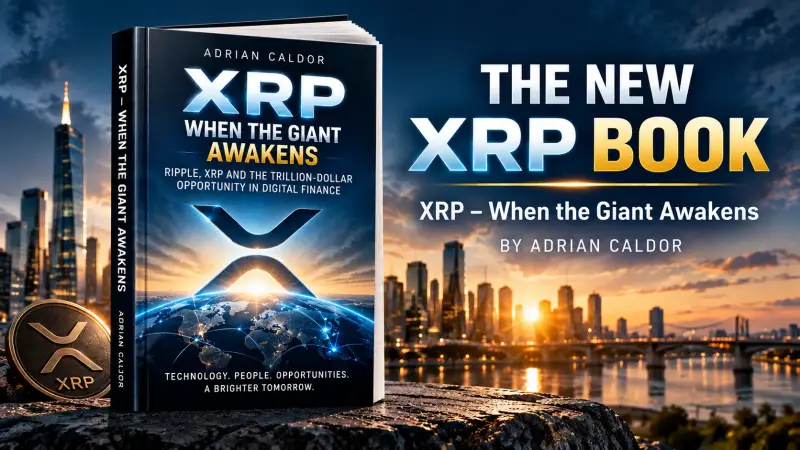
“XRP – When the Giant Awakens” by Adrian Caldor explores these connections in depth and examines how Ripple and XRP may fit into the broader transformation of the global financial system.
Available as Paperback & Kindle eBook.
WHAT ROLE COULD RIPPLE PLAY IN THE FUTURE?
Ripple’s future significance will depend on how widely digital assets, stablecoins, tokenization and blockchain-based financial infrastructure are adopted within the institutional financial sector.
Ripple is active across several areas of this transformation – from cross-border payments and digital asset custody to stablecoin and blockchain infrastructure.
At the same time, the company operates in a highly competitive environment that includes banks, FinTech companies, stablecoin providers and other blockchain networks. Ripple’s long-term role in the global financial system will therefore depend on technological development, regulation and real-world adoption.