

XRP LEDGER – THE TECHNOLOGY BEHIND XRP
FAST, DECENTRALIZED AND BUILT FOR DIGITAL VALUE
The XRP Ledger (XRPL) is a decentralized blockchain infrastructure designed for fast, efficient and low-cost transactions. It provides the technological foundation for XRP, but its capabilities extend far beyond transferring XRP alone.
The XRP Ledger can be used to issue, transfer and exchange different types of digital value, including tokens, stablecoins and other digital assets. The network does not rely on traditional mining and instead confirms transactions through its own consensus mechanism.
HOW DOES THE XRP LEDGER WORK?
The XRP Ledger does not use a Proof-of-Work mechanism like Bitcoin and therefore does not require energy-intensive mining. Instead, independent validators use a consensus mechanism to agree on the valid state of the network.
Transactions are typically completed within a few seconds. Each transaction requires a very small fee paid in XRP. This fee is not distributed to validators but is permanently destroyed.
This architecture enables high transaction throughput with relatively low energy consumption, making the XRP Ledger particularly relevant for applications where speed, cost and reliability are important.
WHAT CAN THE XRP LEDGER DO?
The XRP Ledger is designed for more than XRP transactions. The network can also be used to issue, transfer and exchange tokens and other digital assets.
Its built-in decentralized exchange functionality enables different assets to be traded directly on the ledger. Over time, the network has also gained additional capabilities for areas such as automated liquidity, tokenization and digital asset applications.
This allows the XRP Ledger to serve as infrastructure for a wide range of financial use cases – from payments and trading to the creation and transfer of digital value.
XRP LEDGER AND TOKENIZATION

The tokenization of real-world and digital assets is one of the areas where blockchain infrastructure is gaining increasing attention. Assets such as currencies, financial instruments and other forms of value can potentially be represented digitally on a blockchain.
The XRP Ledger provides infrastructure for issuing, transferring and exchanging these digital assets. Stablecoins can also be issued on the network and used for payments and other financial applications.
This could make the XRP Ledger particularly relevant where digital assets, liquidity and payments need to interact within the same infrastructure.
UNDERSTANDING THE XRP LEDGER – THE TECHNOLOGY BEHIND XRP
To understand the potential of XRP, it is important to understand the technology behind it. Speed, consensus, liquidity, tokenization and the transfer of digital assets are among the key characteristics of the XRP Ledger.
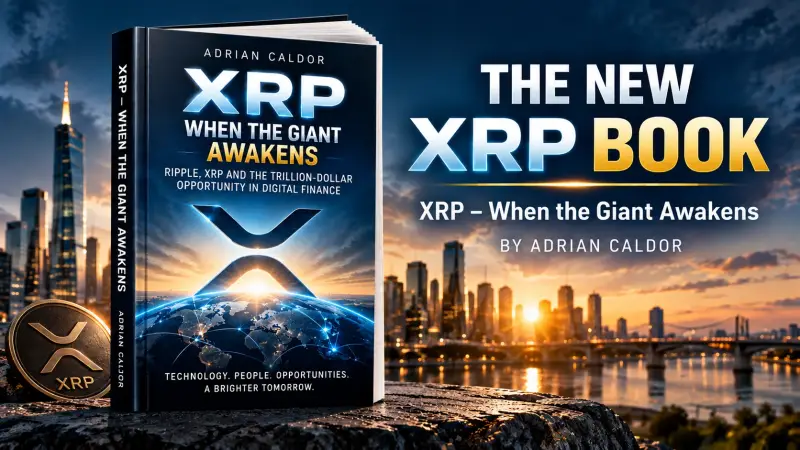
“XRP – When the Giant Awakens” by Adrian Caldor explores the XRP Ledger within the broader financial landscape and examines how XRP, Ripple, stablecoins and the increasing digitalization of the global financial system are connected.
Available as Paperback & Kindle eBook.
WHAT ROLE COULD THE XRP LEDGER PLAY IN THE FUTURE?
The XRP Ledger competes with numerous other blockchain networks as well as traditional financial technologies. Speed and low transaction costs alone therefore do not guarantee widespread adoption.
What ultimately matters is which applications are actually built, how liquidity develops and how the regulatory environment for blockchain-based financial infrastructure evolves.